Why is a good indoor environment relevant – and what financial benefits does it have?
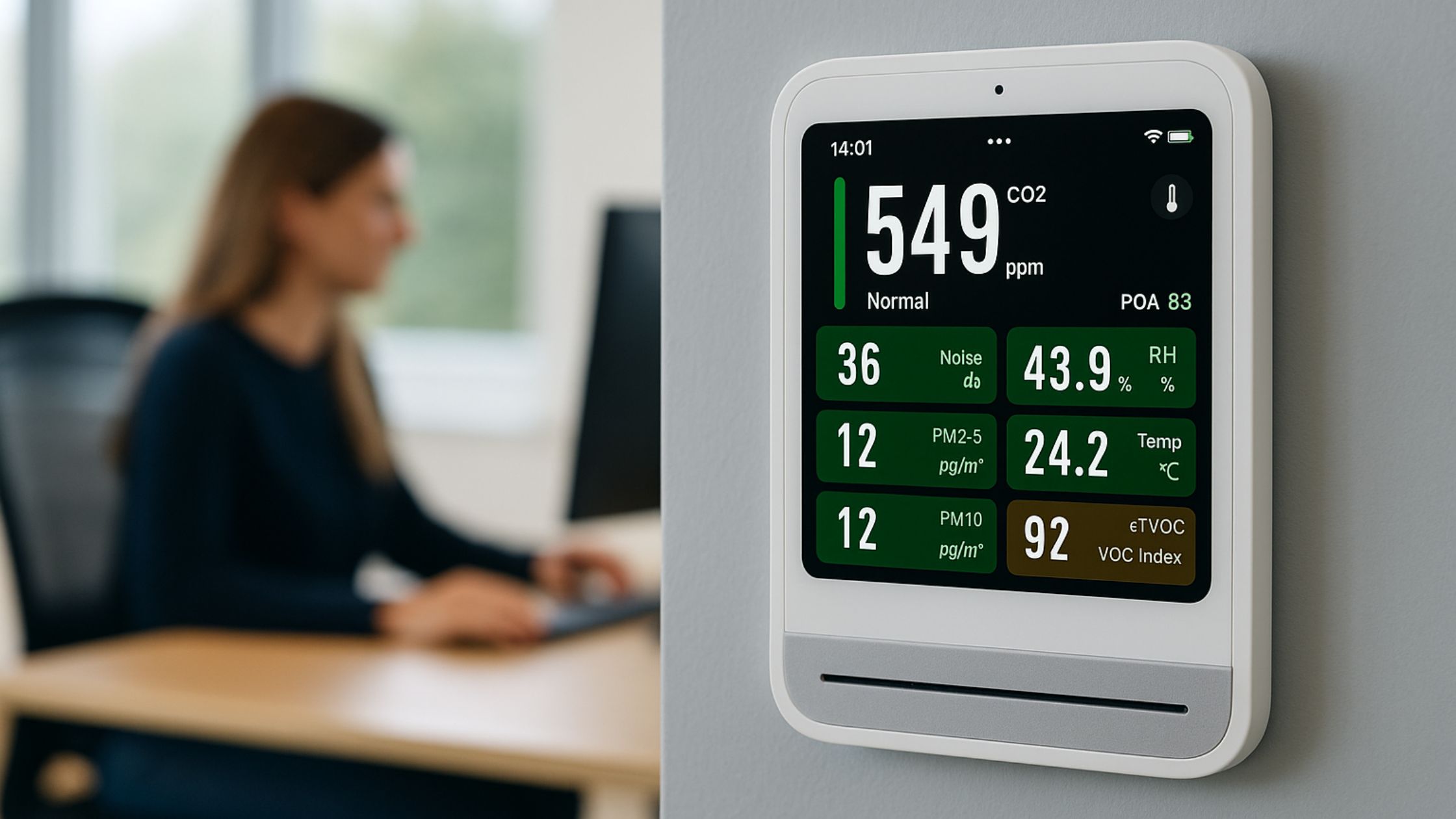
Of course it’s a no-brainer that a good indoor environment is relevant. Building users should be comfortable while working and learning. However, with buildings becoming more energy efficient, they have also become more airtight – which can be harmful to the indoor environment. Factors like poor indoor air quality affect way more than comfort – they can also have a negative impact on the occupants’ health. Which, ultimately, has an effect on the bottom line.
Let’s dive into the details.
Good indoor air quality isn't just a nice-to-have, it's a must-have
We spend about 90% of our time indoors [1] – at home, at work, at events, at university, school or in kindergarten. Alas, the pollutants, e.g. particles, volatile organic compounds (VOCs), and carbon dioxide we are exposed to and breathe in, can have a significant impact on our health and well-being.
How poor air quality impacts health & productivity
The “sick building syndrome” (SBS) is a building-related illness which was first reported when building envelopes started to be better sealed. The occupants “of poor performing buildings started reporting a wide range of symptoms including respiratory irritation, allergies, and headaches.” [3] Their symptoms were later attributed to chemical and biological pollutants that had built up, decreasing the indoor air quality.
Keeping CO2 below 1000 ppm (parts per million) is vital to avoid health issues like headaches, dizziness, and even cognitive impairment:
- Research shows that a mere 500 ppm increase of atmospheric CO2 levels can significantly impact cognitive function and productivity.
- Prolonged exposure to levels as low as 1000 ppm has been linked to inflammation, cognitive decline, and even potential damage to kidneys and bones.
Researchers from Harvard T.H. Chan School of Public Health have found that office workers who worked in well-ventilated environments scored 61% higher within nine cognitive function domains (such as crisis response, strategy, information usage) than their peers who were exposed to various concentrations of VOCs. Under the best possible circumstances, cognitive function was even increased by a whole 101%. Similar to this, the office workers also scored better in 7 out of 9 cognitive functions when CO2 levels decreased. [1]
In practical terms, workers in cleaner air make better decisions faster and get more done, directly contributing to a company’s output.
Read more about the findings of the “The Impact of Green Buildings on Cognitive Function” study here: https://thecogfxstudy.com/study-1/
Absenteeism due to illness
Improving IAQ doesn’t just boost how efficiently people work – it also helps ensure they can work by reducing illness.The previously cited study of Harvard T.H. Chan School of Public Health merely focuses on cognitive function and thus only provides a conservative estimate of what positive effects improved indoor environments can have. For instance, the risk of airborne diseases like influenza increases with lower ventilation rates. So co-benefits can include reduced absenteeism because employees get sick less frequently – which ultimately impacts productivity. [4]
Thermal comfort
Although the term may suggest otherwise, thermal comfort does not only relate to an occupant’s comfort, but also productivity, health, and well-being. Research shows that an office worker’s satisfaction with the indoor temperature can positively impact productivity. On the other hand, high thermal discomfort can lead to the afore-mentioned Sick Building Syndrome. Symptoms like itchy eyes, runny nose, and even skin irritation can occur. [5]
This underlines the necessity for anyone involved in building design to HVAC management to ensure the occupants’ thermal comfort, too.
Why good air pays back many times over
Companies in the EU suffer an estimated 923 billion Euro in lost worker productivity due to bad indoor climate – every single year. [6] In the U.S., “Absenteeism, productivity losses, and healthcare costs due to ventilation are estimated to have annual economic impacts in the hundreds of billions of dollars” [7].
Only 10% of the cost of a building is related to heating, ventilation etc. – the remaining 90% are expenses that can be allotted to the occupants (salaries, benefits, …). And yet, “indoor environmental quality and its impact on health and productivity are often an afterthought,” [1] says Joseph Allen, assistant professor of exposure assessment science, director of the Healthy Buildings Program at the Harvard Center for Health and the Global Environment.
But with occupant health being difficult to characterise, building managers are incentivised to reduce costs instead of the health performance of buildings. And one technical appliance that consumes a fair amount of energy, is the ventilation system which is why it is tempting to reduce ventilation rates in order to lower consumption. [4]
However, ultimately the bottom line would benefit from prioritising the employees’ health.
No tradeoff between energy efficiency and Indoor Air Quality
A common concern among building owners and managers is that increasing ventilation or air purification will drive up energy costs (for heating/cooling the additional air) and thus create a trade-off between energy efficiency and indoor air quality.
Although not directly measurable, the impact improved ventilation has on occupants’ productivity and health, far outweighs direct energy savings and environmental effects. In fact, increased employee productivity is more than 150 times greater than the resulting energy costs – even with conservative estimates.
Researchers found that while doubling the ventilation rates incurs a cost of $40 per person per year, it leads to an 8% increase in worker performance, resulting in a productivity gain of $6,500 per person. [4]
“We have been presented with the false choice of energy efficiency or healthy indoor environments for too long. We can – and must – have both." [8]
– Dr. Joseph Allen
(Assistant Professor of Exposure Assessment Science at the Harvard T.H. Chan School of Public Health, Director of the Healthy Buildings Program at the Center for Health and the Global Environment at Harvard Chan School, Principal Investigator for the study)
This finding highlights that sustainable energy practices and the well-being of individuals in indoor spaces are not mutually exclusive. In many cases, technologies like demand-controlled HVAC as well as smart building management can minimise or offset the energy impact entirely. Therefore, a balanced approach that prioritises both is not only feasible, but needed.
Critical need for effective ventilation strategies
Traditional ventilation systems with constant supply air parameters can cause pollutants to accumulate, promote cross-infection, and, of course, generate a lot of energy waste. MacNaughton et al. suggest modifiable ventilation rates [9] and investing “in other ventilation strategies such as advanced air distribution systems and improved filtration, which reduces contaminants that may cause cognitive impacts.” [4]
Smart design and operation are key factors: monitoring and controlling ventilation based on real-time needs can ensure air is kept clean without excessive conditioning of unused spaces.
How AI supports efficient HVAC management
There is tremendous promise in integrating AI in HVAC systems in order to automate and intelligently control heating, ventilation, air conditioning as well as humidity indoors. A study conducted by Navigant Research concluded that AI-operated systems use up to 20% less energy compared to conventional systems. [10]
An experience we’ve also made in buildings that use Ento Control to manage indoor air quality (IAQ) as well as temperature. The system optimises energy consumption based on real-time sensor data, building characteristics, and weather conditions.
Unlike traditional HVAC systems that run continuously or at a timed schedule, AI-driven systems operate selectively, adjusting energy use based on demand and forecasted need, using a sophisticated machine learning model.
For instance, in terms of indoor air quality, demand-controlled ventilation relies on IAQ sensors to measure pollutants, typically carbon dioxide as it serves as a good proxy for the overall indoor air quality. When pollutant levels rise,the HVAC system is activated based on demand. [11]
To control heating systems efficiently – to increase occupant well being and cut excess energy consumption, a predictive heating strategy is made for each HVAC zone or section in the building. Here, factors like outdoor temperature and solar irradiance are used to forecast the need and timing of running the heating systems. As each building is unique a statistical model is built on either a system level or at a specific zone control.
Ento's Indoor Climate Advisor focuses on two key objectives: ensuring optimal comfort by maintaining temperature and CO2 levels, and improving energy efficiency. The Advisor suggests adjustments, such as night and weekend setbacks, in buildings where these measures aren’t yet in place.
The algorithms’ predictive capabilities and automated alerts support energy managers in ensuring the efficiency of the system through timely interventions whenever problems arise.
This not only reduces energy waste and operational costs, but also extends the lifespan of HVAC systems and their components.
The role of regulations in maintaining healthy indoor environments
As the importance of good indoor air quality becomes more recognised, many countries are implementing regulations to ensure that buildings, especially schools and day care centers, meet specific air quality standards.
In Denmark, for example, the Bygningsreglement (“Building Regulation”) mandates that day care centers and classrooms adhere to specific ventilation rates, with CO2 levels required to stay below 1,000 ppm. [12] These regulations help prevent adverse health effects like cognitive impairment, headaches, and dizziness, ensuring that environments are conducive to both learning and well-being.
However, a 2021 mass study of Danish classrooms revealed that 9 out of 10 have poor indoor air quality. The study also showed that classrooms with mechanical ventilation systems had significantly lower levels of harmful chemicals compared to those relying on manual airing out. [13]
Further, a study by Wargocki et al. concluded that children perform school work 12% fast as well as 2% more accurately when the CO2 levels of the classroom are 900 ppm instead of 2,100 ppm.
This underscores the importance of not only meeting ventilation standards but also optimising them to improve occupant health and productivity.
Case: Real-time Indoor Air Quality optimisation in schools
To exemplify the impact an AI-operated ventilation system can have, let’s look into the following case of Ento Control in action, optimising ventilation in a Danish school.
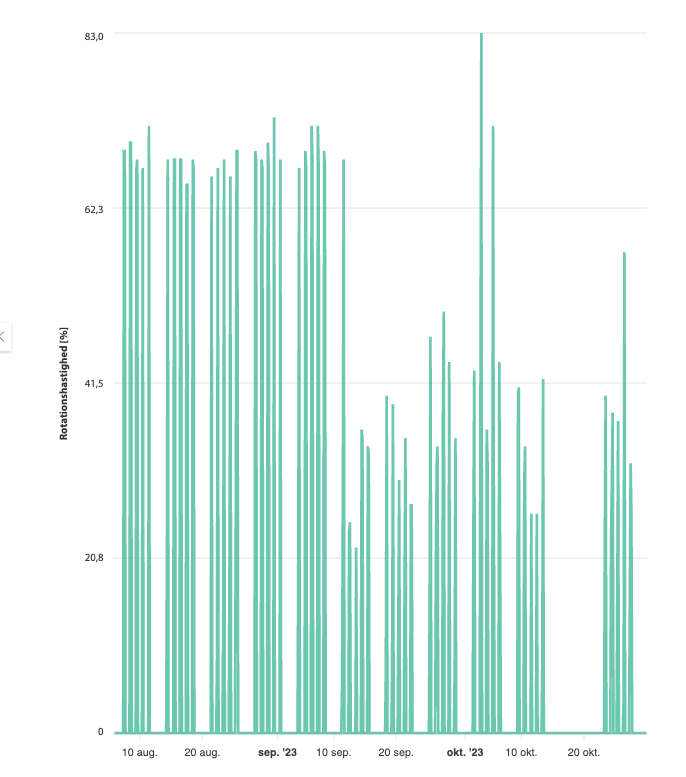
The school introduced Ento Control in September 2023. The effect was immediate: fan speeds were noticeably reduced, and the system automatically shut down during school holidays.
The system’s ability to adjust fan speeds ensures that CO2 levels remain within acceptable limits, reducing the risk of cognitive impairment and maintaining an optimal learning environment. By automating ventilation in response to real-time conditions, the AI-powered system not only improves indoor air quality but also optimises energy use, avoiding unnecessary ventilation when the air quality is already within the desired range or when classrooms are unoccupied.
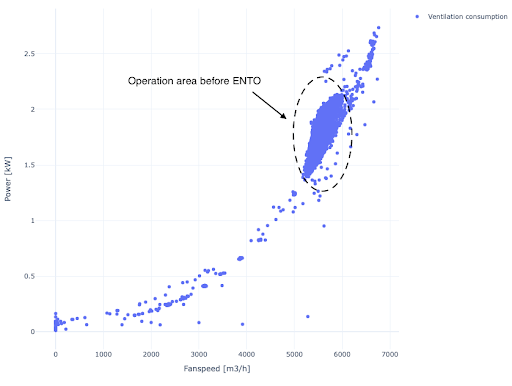
The following illustration highlights the broader potential of smart ventilation control. Before optimisation, ventilation systems often operated within a narrow, inefficient band – running harder than necessary regardless of actual air quality needs. With AI-driven control, operation becomes dynamic, adjusting airflow to match demand while still ensuring healthy indoor conditions.
Importantly, the figure also demonstrates the fan affinity laws: power consumption does not increase linearly with fan speed. This means that overventilation is disproportionately expensive compared to running in lower fan speed ranges. In other words, it’s not about reducing ventilation to unsafe levels, but about avoiding costly overventilation when it is not needed.
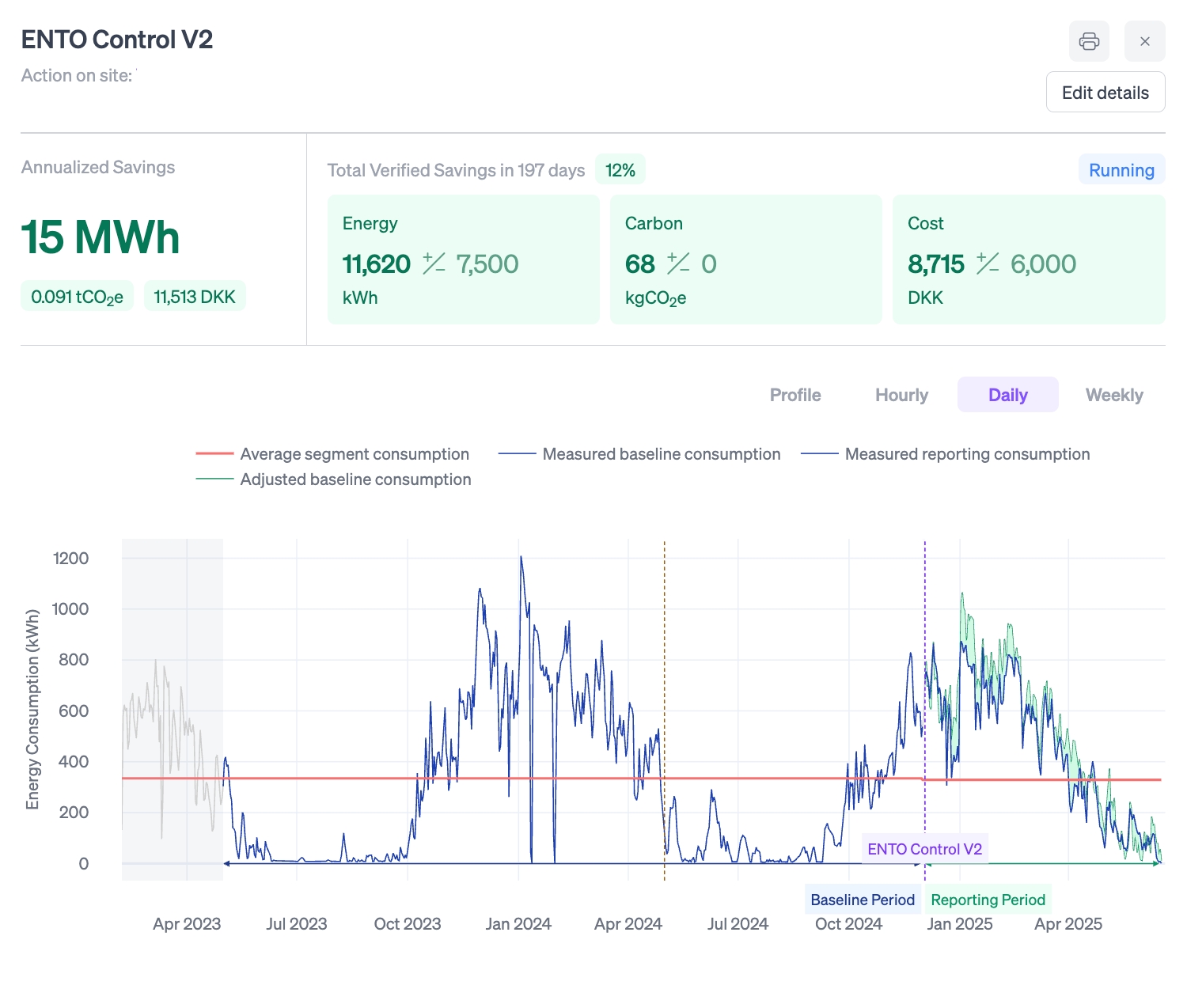
The implementation of Ento Control confirmed the measurable benefits of this approach. Over a 197-day period, the system delivered annualised savings of 15 MWh – equivalent to 11,620 kWh and more than 11,500 DKK – without compromising indoor air quality. Instead, ventilation was aligned more closely with actual occupancy and demand, ensuring both efficiency and comfort.
The case illustrates how smart, demand-based ventilation management not only reduces wasted energy but also ensures that students and teachers benefit from consistently healthy indoor environments – a balance that is crucial in schools where learning, well-being, and comfort go hand in hand.
It also highlights the significant potential of AI in enhancing both the health and energy efficiency of indoor environments, making it a key tool for modern, sustainable building management.
Conclusion: Balancing health, comfort, and efficiency pays off
As we've seen, the impact of indoor air quality (IAQ) extends far beyond comfort – affecting both health and productivity. The financial implications are significant, with poor IAQ contributing to billions in lost productivity each year.
However, the solution is clear: adopting innovative technologies like AI-powered HVAC systems and ensuring compliance with building regulations can dramatically improve both the environment and the bottom line.
Every Euro spent on better air pays back multiple times in productivity, and every intervention that keeps employees healthier and more comfortable has ripple effects on engagement and performance.
AI-driven solutions, such as Ento Control, enable tangible improvements in sustainability, comfort, and operational efficiency. By optimising ventilation based on real-time sensor data, these systems not only maintain healthy air quality but also reduce energy consumption, making them a win-win for both sustainability and occupant health.
Sources
[1] Harvard T.H. Chan School of Public Health "Green office environments linked with higher cognitive function scores"
[2] Indoor air quality and energy management in buildings using combined moving horizon estimation and model predictive control, https://www.sciencedirect.com/science/article/abs/pii/S2352710219327408
[3] Redlich, C.A.; Sparer, J.; Cullen, M.R. Sick-building syndrome. Lancet 1997, 349, 1013–1016
[4] International Journal of Environmental Research and Public Health "Economic, Environmental and Health Implications of Enhanced Ventilation in Office Buildings"
[5] David H.C. Chow, Indoor Environmental Quality: Thermal Comfort
[6] https://stateofgreen.com/en/news/designing-sustainability-in-buildings/
[7] Fisk, W.J.; Rosenfeld, A.H. Estimates of Improved Productivity and Health from Better Indoor Environments. Indoor Air 1997, 7, 158–172.
[8] https://thecogfxstudy.com/study-1/improved-productivity-quantified/
[9] Ren J., Cao S.J. Incorporating online monitoring data into fast prediction models towards the development of artificial intelligent ventilation systems. Sustainable Cities and Society. 2019;47
[11] Indoor air quality and energy management in buildings using combined moving horizon estimation and model predictive control, https://www.sciencedirect.com/science/article/abs/pii/S2352710219327408
[14] https://www.swegonairacademy.com/updates-insights/air-academy-updates/back-to-school-research-driven-insights-about-indoor-climate-and-student-learning/ / (Wargocki et al., 2020)
Start saving energy
- Discover hidden savings potential in your buildings
- Turn complex energy data into clear, actionable insights
- Measure impact and prove results with real-time reporting