65 energy professionals, a constant buzz of conversations in the unusual setting of a yurt: Inside Ento's Customer Summit
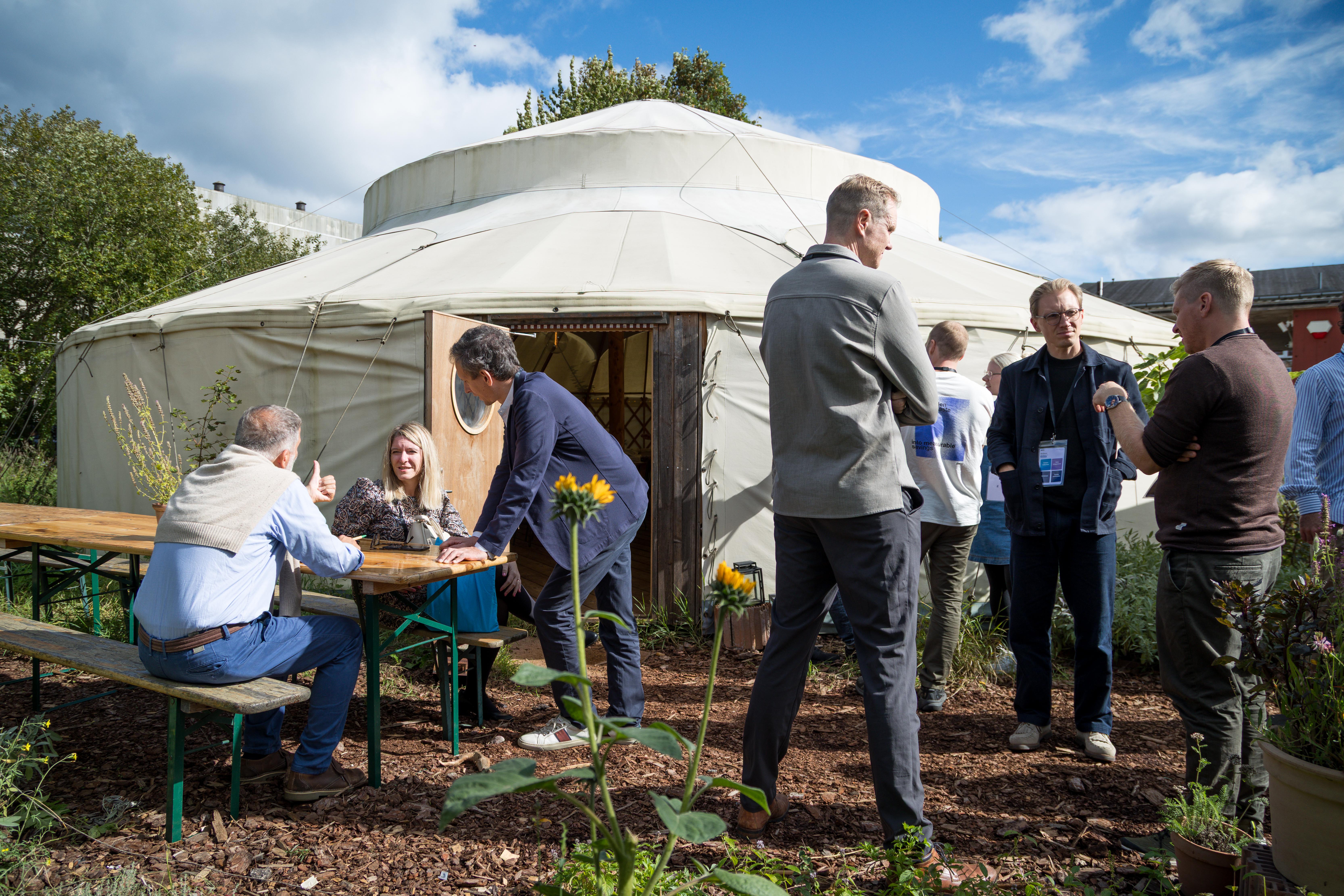
There are conference venues, and then there was this: a yurt, ringed by a garden, with a cat weaving between chair legs and chickens clucking somewhere just outside the door. It wasn't the setting anyone expected for a gathering of energy management professionals, and that was exactly the point.
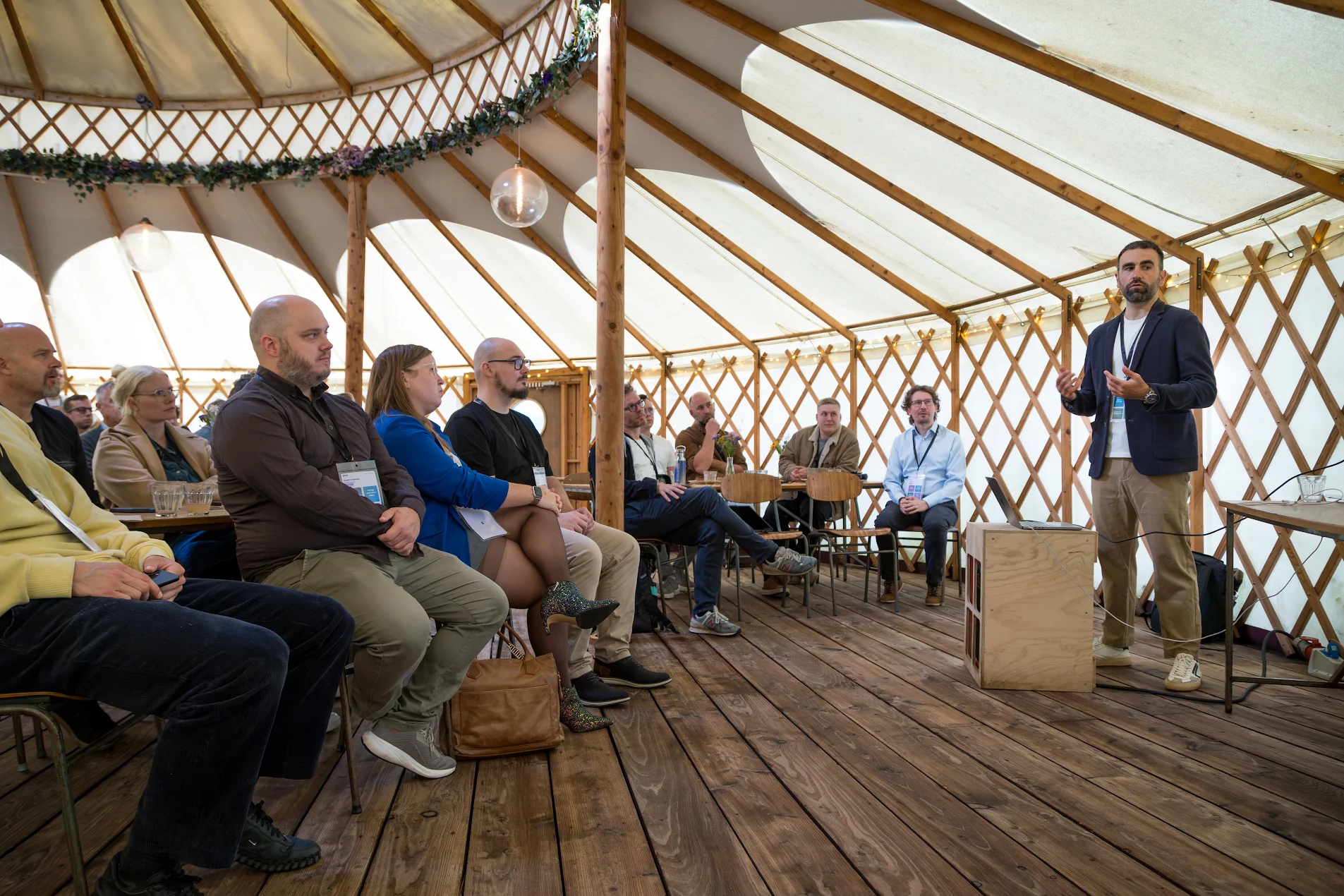
Fifty customers from Denmark to Italy made their way to the unconventional venue for Ento's annual customer summit, and from the moment doors opened, the atmosphere had a buzz that's hard to force. Conversations started early and didn't let up.
.webp)
That was, by design, the whole idea. Rather than treating networking as the filler between sessions, the summit built its identity around it. The round, open shape of the yurt itself seemed to encourage circulation: there were no back rows to hide in, no easy corners to disappear into. People moved, mingled, and kept running into each other again throughout the day.
But the summit was not only about networking. We got to meet some inspirational speakers, and one thing was clear. Tech scales fast, adaptation doesn't.
Enrico Ferri, EssilorLuxottica: the challenge is no longer finding the waste
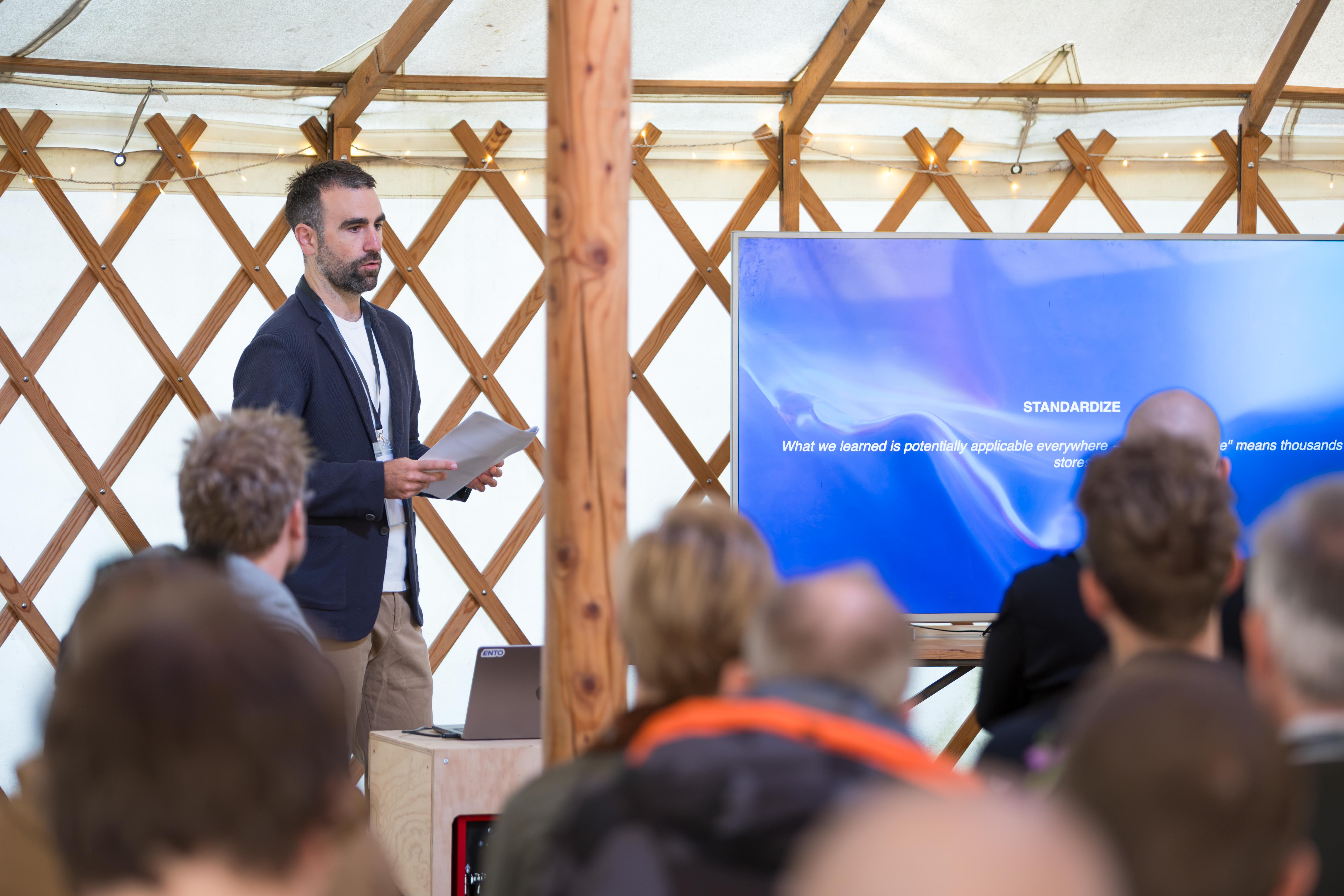
Enrico opened with the scale he works at. EssilorLuxottica runs 20,000 stores worldwide and consumes more energy than 145,000 homes.
His team had already proven the point in a small pilot: 100% of the stores they looked at were consuming energy overnight, with the shops closed. Lights, LED walls, signage and HVAC quietly running through the night. But that pilot ran on physical sub-meters in every store. Eight buildings took a year to instrument, and at portfolio scale the hardware cost meant the business case never added up.
What changed with Ento was the input. No new hardware, just the main meter data that already existed, with the analysis done by AI on top. 236 stores were mapped in two weeks, and over 1 GWh of energy waste identified. He showed two Italian stores that got new timer rules and cut consumption by 19% and 20% year on year. The platform is now adopted in 500+ stores with more than €400K of quantified savings potential.
With the business case proved, Enrico is now focused on scaling with utility meters rather than installing new hardware, and on a harder problem: "The challenge moved from installing metering to identifying waste. The challenge is removing organisational friction to act on it at scale."
He closed on where he first heard the idea: "Remember to switch off the light before leaving," as his grandmother used to say. He and his team now get to do exactly that on consumption 145,000 times higher.
Signe Biering: how to lead people without managerial power
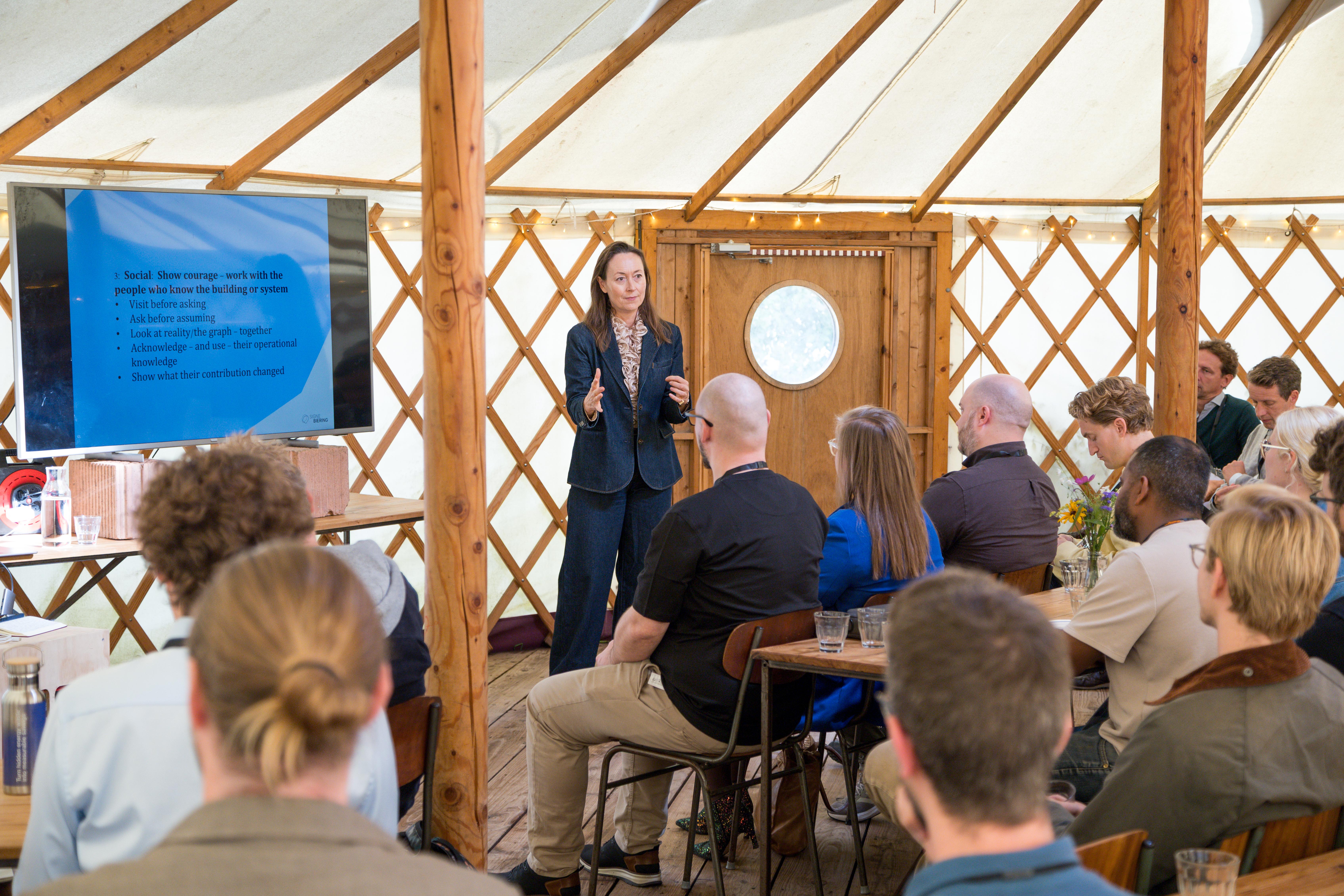
Organisational friction was where Signe picked up. A leadership advisor and former diplomat, Signe gave a talk that was really about what it takes to fight the fights that change requires. So how do you lead without necessarily having managerial power or authority over wider teams and colleagues? You can see the problem on a dashboard, but the person who has to act doesn't report to you, and might have different priorities than you.
Her frame was psychological courage. Identify the problems that quietly block progress, then diagnose what "no response" actually means: they can act but won't prioritise it, they can't translate your request into practical action, or the organisation has no route from insight to action at all. Different problems, different fixes.
She broke the session three times for five-minute workshops, putting the diagnosis back to the room: what is blocking you right now, and what has actually worked? The problems named were strikingly similar across retail, investment and public portfolios, and so were the workarounds.
Her checklist for a request that actually makes progress: easy, meaningful, social, timely. Can they see what to do? Does it connect to their work? Are their expertise and relationships part of the solution? And is the ask clear and well timed?
Making asks concrete and timely, while connecting (social) with peers, is a recommended rule for energy managers. Compare the message that gets ignored:
with the same data, made specific, timely and socially connected:
Same data. Very different odds of a response.
Sine Kallestrup Sørensen, Newsec: energy savings become property value
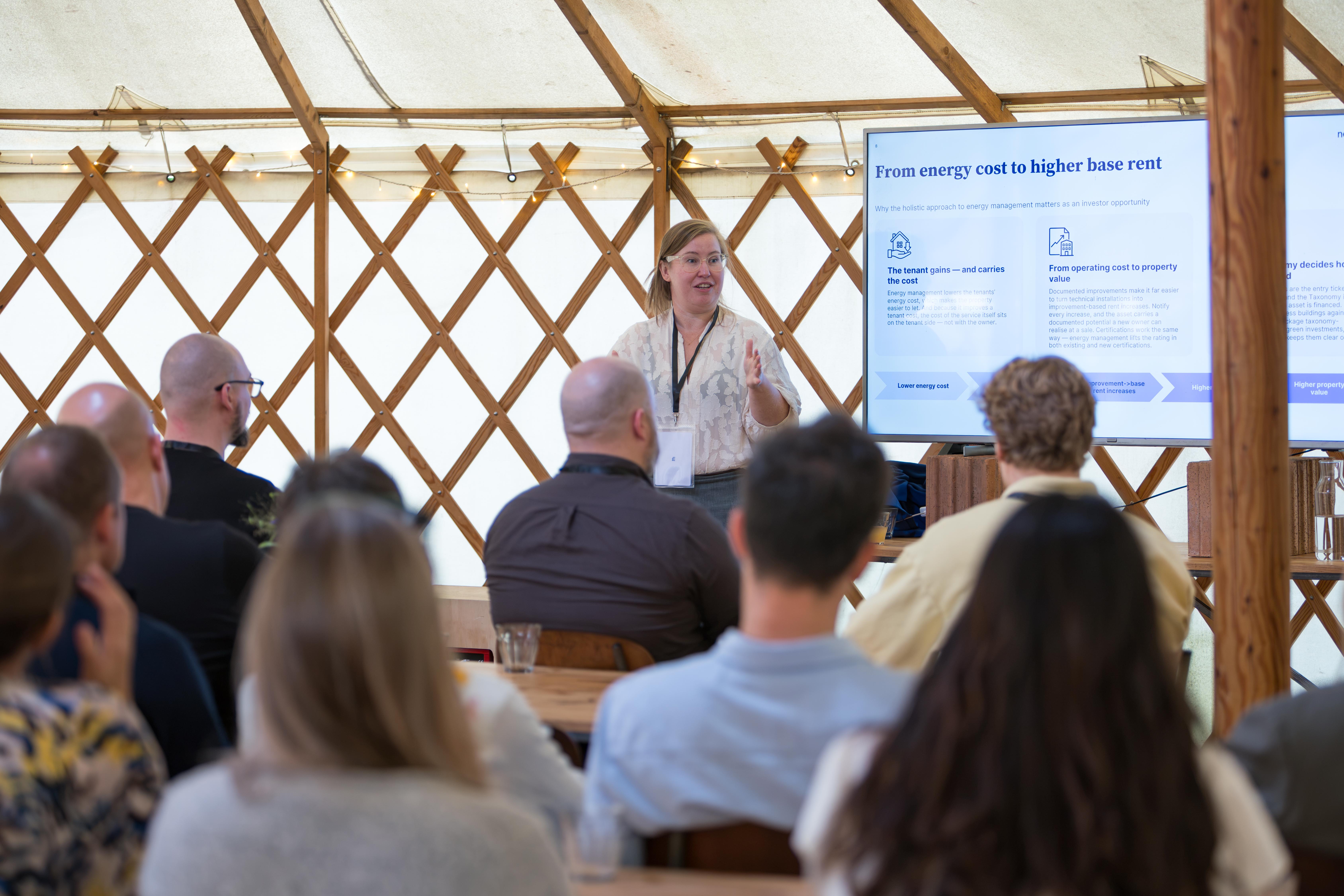
If Signe's talk was about getting the action, Sine's was about what that action is worth once it happens. She brought the investor lens. At Newsec, energy management runs as one continuous loop: certification sets the strategy, benchmarks set the long-term budget, expected savings from every project get loaded into Ento so results are verified rather than assumed, and daily monitoring feeds the next round. Think planning, action, documentation, value, repeat.
Real estate, being the world's largest financial asset class, needs energy reductions to improve investor returns, to really make the wheels spin.
For Dades, one of Newsec's major clients, she showed what that compounds into. Over 200 projects, 28% of Energy Performance Certificates (EPCs) improved at building level so far, around 4,000 MWh and 700 tonnes of CO2 savings annually.
As Newsec's clients are investors, savings benefit the tenants. This is why the service and costs sit on the tenant side of the account. Documented improvements support improvement-based rent increases, which lift net rent and property value.
EU Taxonomy alignment has become increasingly important. Here the discussion circled on two themes:
- For green assets (top 15%, typically referred to as an A-rated EPC), bonds become cheaper going forward.
- Brown assets (EPC G and lower) are non-taxonomy-aligned buildings. These are more difficult to finance, and thus more risky to buy.
One of the takeaways from the following discussions was how brown assets can become stranded assets, representing a much higher risk than the premium green assets represent. If there's one thing institutional investors don't like, it's risk.
Henrik Brink, Ento: energy management in the agentic AI era
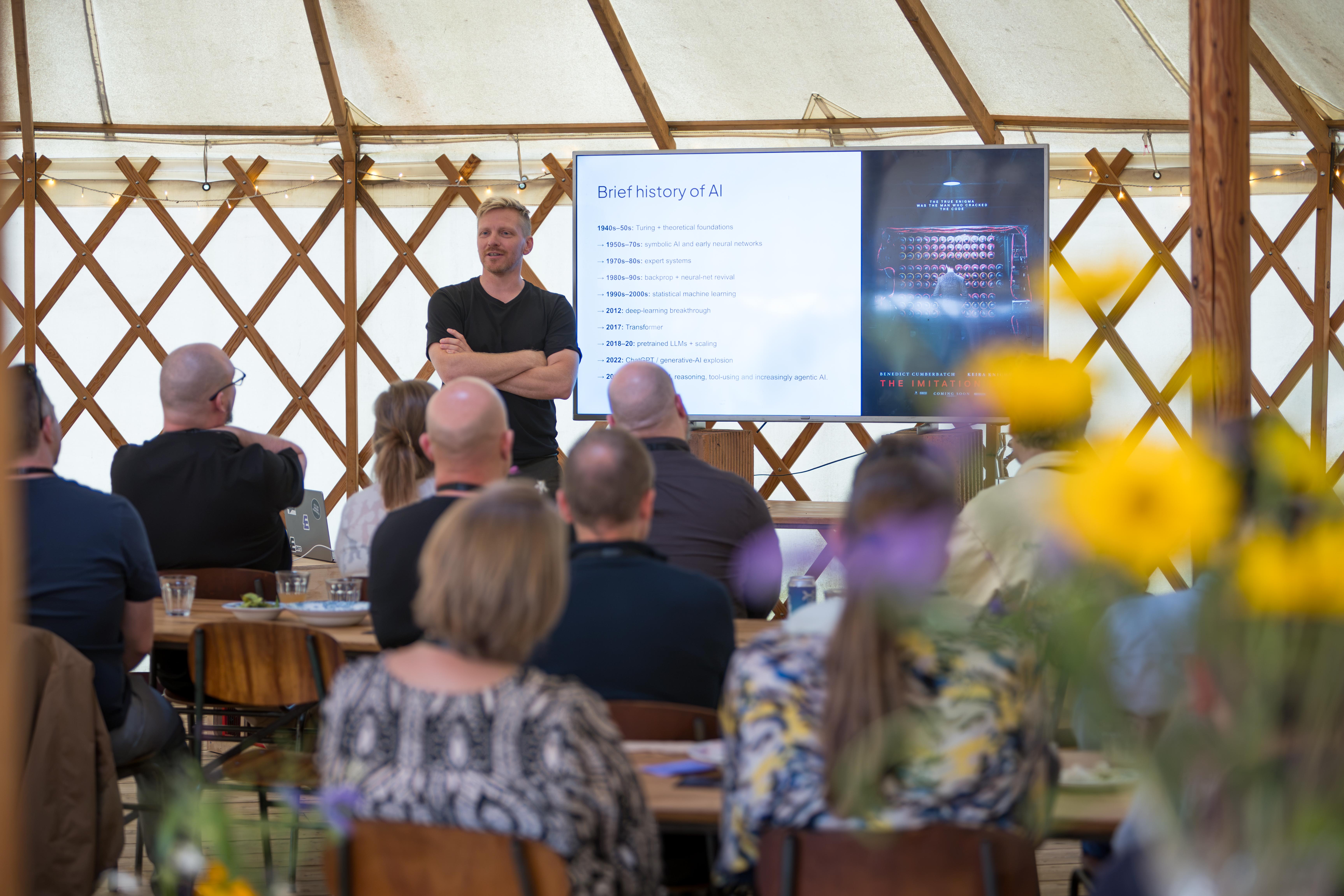
Newsec's loop only runs because people run it, which made Henrik's closing question the right one to end on. He pointed at how fast the ground was moving. In coding, we've gone from humans writing 100% of the code to close to 0% in about two years. The same agentic shift is arriving for software users, also in energy management.
For ENTO, this means that instead of a predefined dashboard with a set of tools one can interact with, we're going towards a more customizable interface and level of input.
What if your energy management system knew the concrete and relevant regulations already? And analysed how you could act to reach organisational goals (being a global retailer, investor or a public building owner). What if we had a much deeper understanding of the buildings we analyse, how well could we target the issues, still just from the main meter data?
Agentic workflows follow natural language much more than we're used to. Think "Analyse the baseload alert on Supermarket 9 and give me a one-pager." But also quarterly reviews, closed-day consumption checks and custom reporting, done in minutes and in natural language instead of interacting with a pre-defined set of features.
Which raises the obvious question: if AI can do all that, what are humans for? Henrik's answer was the note the day ended on. Inspiration and collaboration. Having beliefs and opinions. Choosing what to do. Driving projects. Having taste, knowing whether something was done right. Making and owning decisions.
Or put another way, the thing every speaker had already said in their own words: technology analyses the data. People decide whether anything happens next.
That is when energy monitoring becomes energy management.
What do we bring home?
There's something about swapping online meetings in offices with white walls and fluorescent lighting for canvas walls and a natural environment that loosens people up. Attendees compared approaches to problems they'd all been quietly struggling with on their own, and found, as so often happens when you get the right people in a room, that they weren't as alone in their work as they'd thought.
By the end of the day the value was created from the conversations happening among the participants, from the expert knowledge and input of our speakers, and one of the key takeaways:
Finding the waste is no longer the hard part. Getting someone to act on it is.

